
Worship Impact Assessment
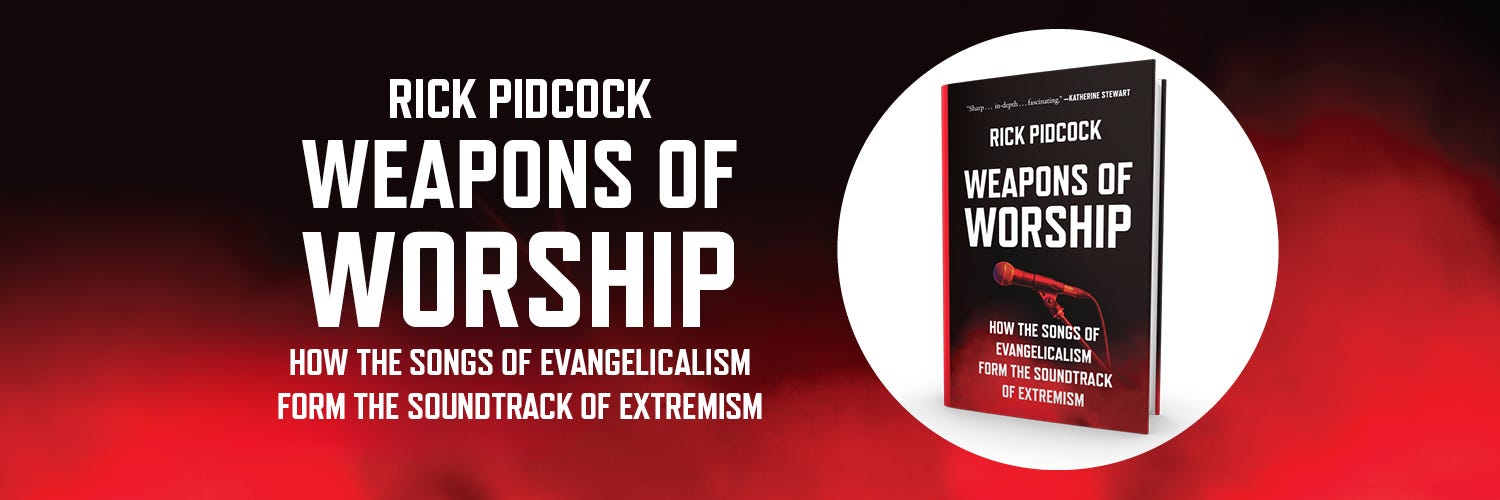
An excerpt from my book "Weapons of Worship: How the Songs of Evangelicalism Form the Soundtrack of Extremism."


The following excerpt is from my book, Weapons of Worship: How the Songs of Evangelicalism Form the Soundtrack of Extremism, which you can pre-order now. Many people have asked what to expect or not expect from the book. Because evangelicals understand all of life as worship, the book could have become a book about everything. So in this excerpt from Chapter 1, I set expectations by naming what it does and doesn’t cover.
The marriage of white evangelical worship music and right-wing politics was not some sudden, random merging of two different domains. Indeed, the white evangelical worship industry fits hand in glove with the extremist right because it has long operated — from the theology of the lyrics and the affections it forms to its mode of production — not to subvert the values of empire but to hallow them.
As the subtitle of Du Mez’s Jesus and John Wayne demonstrates, this extremist movement within white evangelicalism has indeed “corrupted a faith and fractured a nation.” Those who grew up within this tradition respond in very different ways to the theology and politics of white evangelicalism. Some of us may attempt to rid ourselves of unhealthy power dynamics while holding on to the theology. Others may find the theology too connected to the politics and move into some form of mainline Protestantism or progressive Christianity. Others may leave Christianity altogether. And many of us, no matter where we land theologically, are deeply concerned by Christian nationalists’ attempts to overturn democracy. Readers of this book will no doubt hold a variety of perspectives about Christianity.
When a country is attacked, its leaders often perform an impact assessment to determine what happened and how extensive the damage is. Because authoritarian Christians are using worship as a weapon, consider this book to be a kind of worship impact assessment.
I’m going to be straightforward about what I believe are the harmful ways white evangelical worship music is affecting all of us. In doing so, I will deal with a variety of theological and political assumptions in the songs, beliefs, and actions of white evangelicals.
For nonevangelicals, I hope this book will provide some insight into the power dynamics authoritarian Christians are using to reach into your communities against your consent. I realize some of you may not care about the theological nuances or Christian alternatives within some of these conversations. But I think it could be helpful to understand some of these narratives and alternatives in order to prevent extremist Christians from hurting people.
For those who remain evangelical in some way, I hope this book will increase your awareness of the power dynamics at play within your communities. I’m sure many conservatives and moderates will think I’m taking my critique too far at times. But even if you disagree with the way I connect authoritarian politics to authoritarian theology, I hope you’re willing to consider how your theology and worship are being used by some as weapons to harm your neighbors. If you’re more aware of how power dynamics shape your gatherings and fuel the authoritarian impulses of the right, then perhaps you can be more attentive to potential abuses of power.
Again, I am writing this book as a former worship leader-turned-journalist. Were I a theologian or pastor trying to offer a healthy worship alternative, I would write a different book. Theologies of wholeness, belonging, love, and liberation do shape how I interpret reality, so much of my critique of white evangelical worship will lie in demonstrating how hierarchies work against those ideals. Common evangelical hierarchies position some people over others and pit neighbors against one another, with demands for power and threats of eternal violence. As we dismantle the tower of white evangelical hierarchies, some theological alternatives will appear. The perspectives of those on the underside of power, who often worship in very different ways and with a different repertoire than that of white evangelicalism, offer a different stream of worship. But I’m not going to spend a lot of time spelling out alternative approaches to worship or highlighting examples of evangelical worship music that is breaking free of Christian supremacist theologies. Again, that would be a different book.
Weapons of Worship does not comment on or analyze the musical or lyrical quality of worship songs. We’re not going to concern ourselves with assessing how “good” or “bad” any given song might be. In fact, I personally still enjoy many of the songs I mention in this book, despite the lack of consonance I feel with their theological and spiritual perspectives. So I do not intend anything in these pages as a personal critique of anyone who might enjoy how a particular song sounds; nor am I particularly interested in whether the specific aspects of a song’s theology are “good” or “bad.” Nor is this book a comprehensive history of white praise and worship music or Black gospel, or an analysis of evangelical worship patterns more broadly. And while I will speak to the general direction of white evangelicalism as a whole, there is much diversity within this movement. The characters in this book will vary from people on the fringe to those in the mainstream. By no means does everyone in this book have the same theology. There are major distinctions between charismatic and noncharismatic traditions, and even many differing views within those traditions. Each person, institution, or movement is like a piece of a puzzle that creates the larger picture. So by noticing these patterns play out over centuries, I hope to nurture conversations about how so many people got swept up into the theological and cultural dynamics that strengthen the power of those at the top, dehumanize those below, and wage war against those who won’t submit.
So consider this book to be an impact assessment, of sorts, measuring how the hierarchies that prop up white evangelical life—and that are written into their beloved songs—are affecting the rest of us. The music of white evangelicalism offers us a glimpse into the internal longings of the movement—how it views the world, what it prioritizes, what it wants.
In chapter 2, we will delve into the business side of the worship movement, dealing with how the worship music industry determines what songs are being sung in white evangelical churches around the nation and how the power brokers in the industry operate. Then in chapter 3, we will lay out the authority and submission dynamics at play in white evangelical worship. Chapters 4 through 6 will apply that framework to white evangelical worship in the contexts of race and ethnicity, gender and sexuality, and children and youth. Chapter 7 will discuss how white worship music promotes these hierarchies through scripts about the end times. Then chapters 8 through 10 will demonstrate how white evangelical worship music demands the conversion of the individual; how the music invites the anxieties that come from punishment, guilt, and retributive justice into the average white evangelical church worship service; and finally how the spiritual warfare of worship moves out from the walls of the church to the broader community and into extremist authoritarian Christian politics.
Rick Pidcock is a journalist and weekly contributor for Baptist News Global whose work has been featured by the American Academy of Religion, BioLogos, Patheos, the Center for Christogenesis, the Bucks County Beacon, and Real Clear Religion. He is the author of Weapons of Worship: How the Songs of Evangelicalism Form the Soundtrack of Extremism. He is the host of BNG’s Highest Power: Church + State podcast. Prior to becoming a journalist, he led worship for twenty years. Pidcock has a master of arts degree in worship from Northern Seminary and is an at-home parent of five children. He and his family live in South Carolina.
I just read your upcoming book's endorsements. Bravo! I'm obviously going to have to read your book when it comes out.